Evolve how you compute.
We turn discoveries from real neurons into software that makes AI better, faster and cheaper.
To advance AI, we’re going back to nature.
The brain is the most efficient computer ever built.
We’re learning from biology to make technology more efficient, more capable and more intuitive. So it feels more natural and does more for people.
Real neurons. Better AI.
We study how neurons process information, identify useful computational principles and turn those discoveries into software that helps AI do more with less compute.





Encode
Translate an AI challenge into electrical signals that real neurons can process.
Discover
Measure how the neurons respond and identify useful computational principles.
Deploy
Turn those discoveries into a lightweight software layer that improves the AI model.
Meet the world’s first neuron-derived video model.
Built on open source and optimized by discoveries from real neurons, our first model delivers more usable footage, faster iteration, and less compute.
Starting image

Starting image

Starting image
Starting image

Starting image
Starting prompt
The girl kneels by the stream, gently offering bread to the giant furred creature. It slowly lifts a paw toward her. Sunlight filters through leaves, illuminating their quiet moment. The creature's fur, the girl's dress, and the ancient stone ruins remain perfectly still as the paw hovers, poised to accept.
Starting prompt
Cinematic medium shot, slow push-in. A tired nurse in blue scrubs sits slumped against a hospital corridor wall, knees drawn up, eyes closed, head tilted back in exhaustion. Her colleague, also in scrubs with a serious and stoic look on his face, quietly lowers himself down beside her, settling shoulder to shoulder without a word. The nurse's expression softens...
Starting prompt
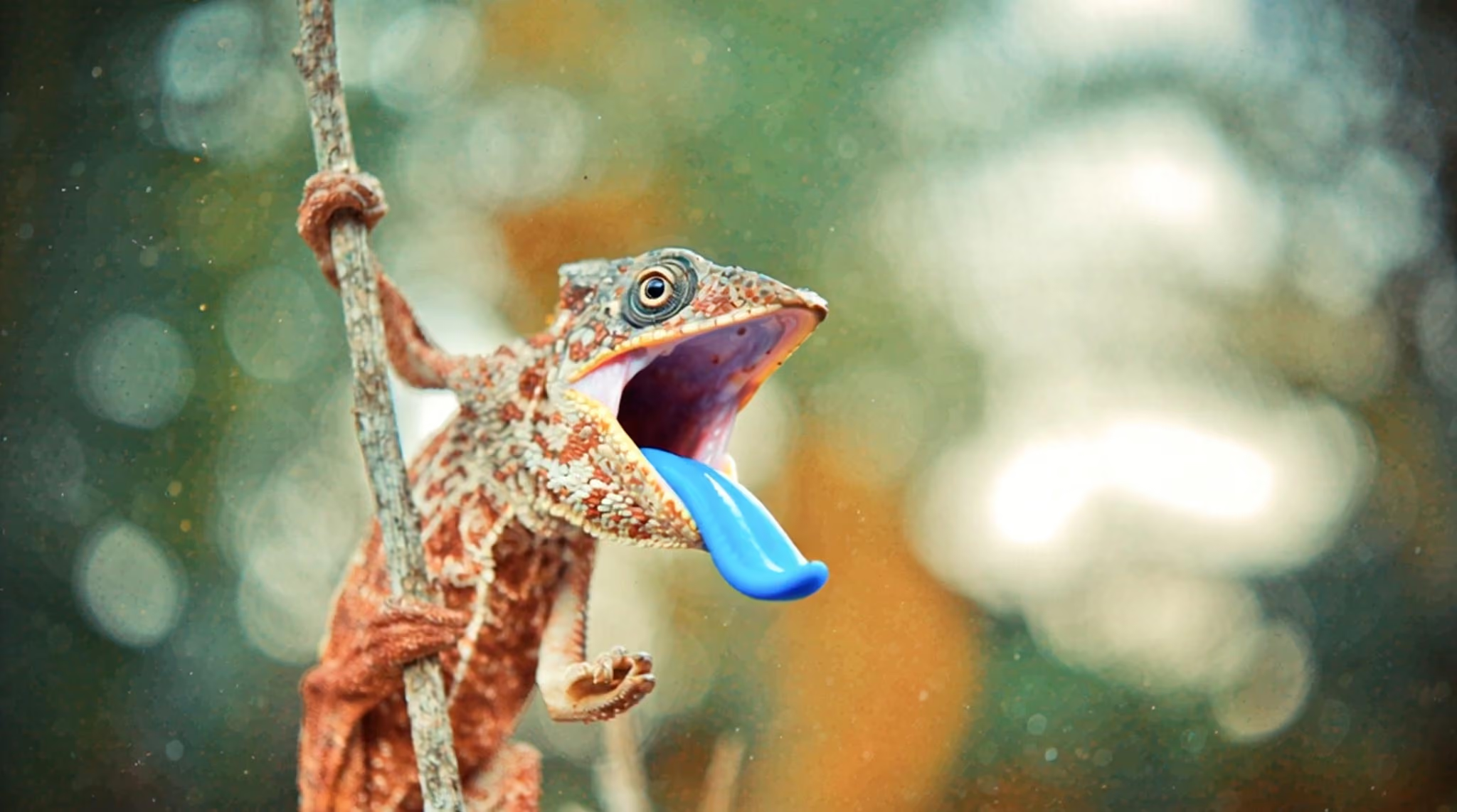
A textured lizard clings to a thin branch, slowly opening its mouth wide and sticking its vibrant blue tongue out. The lizard then retracts the tongue, closes its mouth and holds the pose against a soft bokeh background.
Starting prompt
A hooded man walks away down a wet cobblestone harbor street, carrying a bag, as lightning flashes across the misty mountain sky, illuminating the clouds above with bright white light. Slow push-in camera follows him, keeping the colorful houses and docked boats in frame. Final frame holds as he continues walking, lightning illuminating the clouds above.
Starting prompt
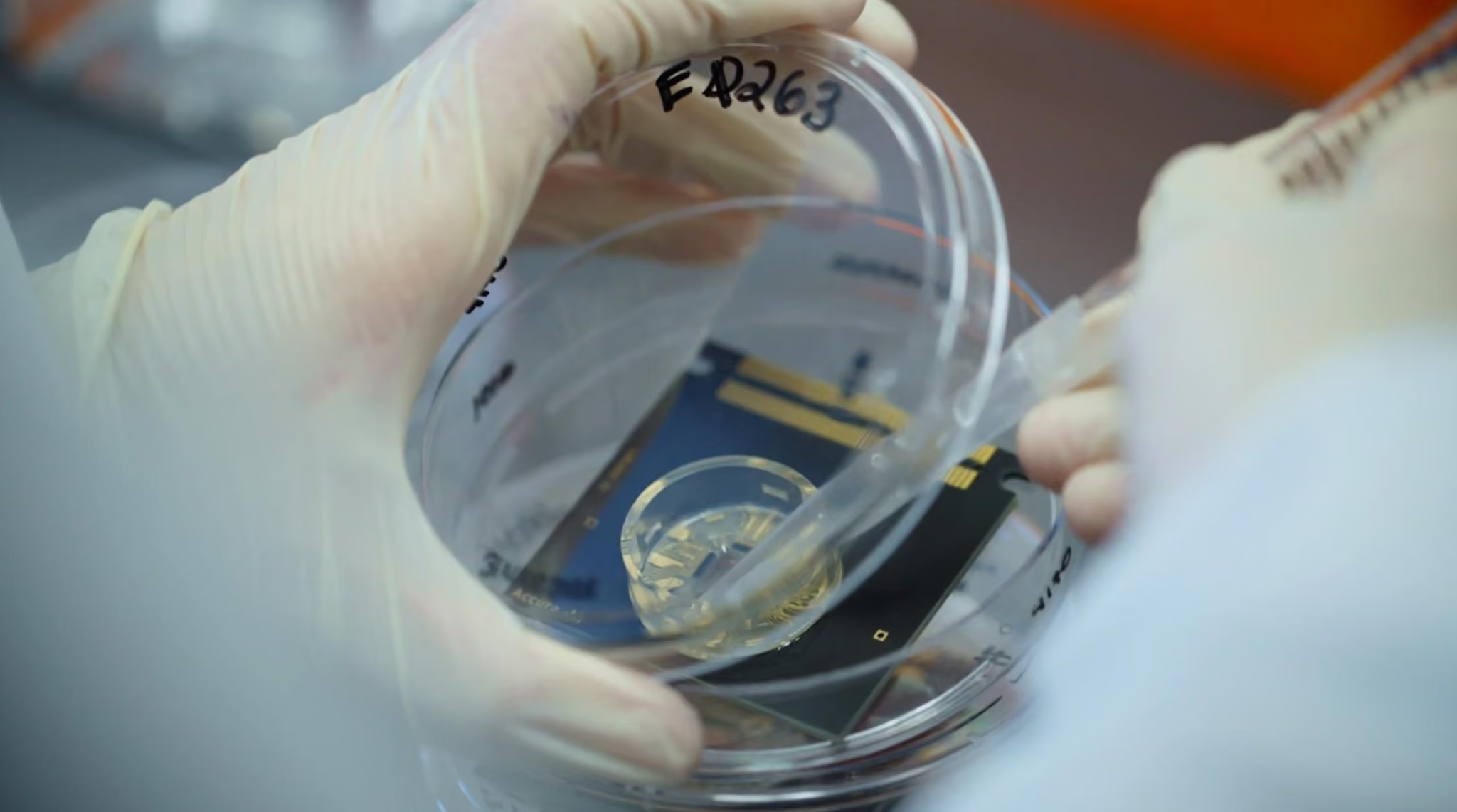
Gloved hands slowly withdraw a syringe from a petri dish labeled E4263, then gently lower and seal the lid. No camera movement. Maintain sharp focus on the dish, hands, and label throughout. Preserve internal components and text clarity.
TBC Video Output
Your questions on TBC, answered.
Computational principles behind our software come from experiments with real neurons. We measure how they process information and translate useful discoveries into code.
The biology is part of the discovery process, not a metaphor for it.
No. The neurons stay in our lab. We use them to make discoveries, then turn those discoveries into software that runs on standard AI hardware. Your video is generated by software, not living cells.
Neurons process information with remarkable efficiency and adaptability. We study how they do it to discover better ways for AI to compute, rather than relying only on bigger models and more infrastructure.
We come post-training. Our lightweight software layer wraps around each diffusion transformer block and adds less than 0.1% to the underlying model.
More usable footage for every minute and dollar spent.
Creators can iterate faster, spend less time rerunning prompts and generate video at a lower compute cost. Businesses can get more output from the same infrastructure budget.
We’re starting with generative video because it puts the hardest parts of AI inference on display: quality, speed, and cost. From there, we plan to expand into world models and, ultimately, real-time biological computing, where neurons and silicon work together.
We're building a new way to compute.
Our first neuron-derived video model is just the beginning. Be the first to create with it and help us build what comes next.